Heat Exchanger Cleaning

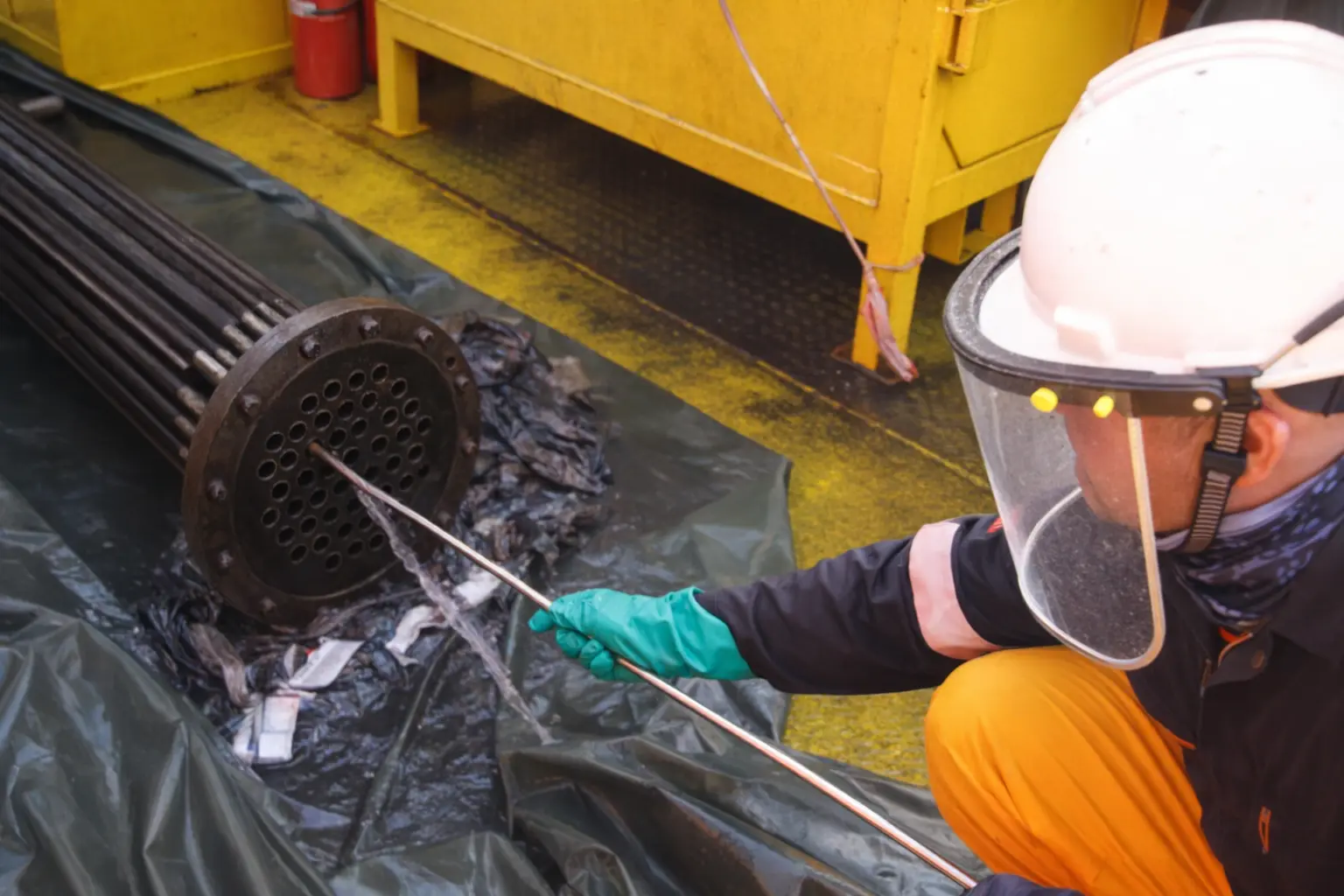
Heat exchangers can accumulate deposits such as scale, sediment, and biological growth on their surfaces. These impurities reduce the efficiency of heat transfer, leading to increased energy consumption, higher operating costs, and potential equipment failure. Regular cleaning is essential to maintain optimal performance and prevent costly downtime.

Maintaining clean heat exchangers is crucial for ensuring efficient operation and extending the lifespan of the equipment. Regular cleaning helps to restore heat transfer efficiency, reduce energy consumption, minimize the risk of unscheduled shutdowns, lower maintenance costs & enhance overall system performance.

We can clean all types of heat exchangers used in the oil and gas and petrochemical industries, including shell and tube, plate, double pipe, air-cooled heat exchangers, evaporators, and boilers. Our expert team is dedicated to maintaining your heat exchangers in peak condition, enhancing their longevity and performance.

Categories

High Pressure Hydro-jetting

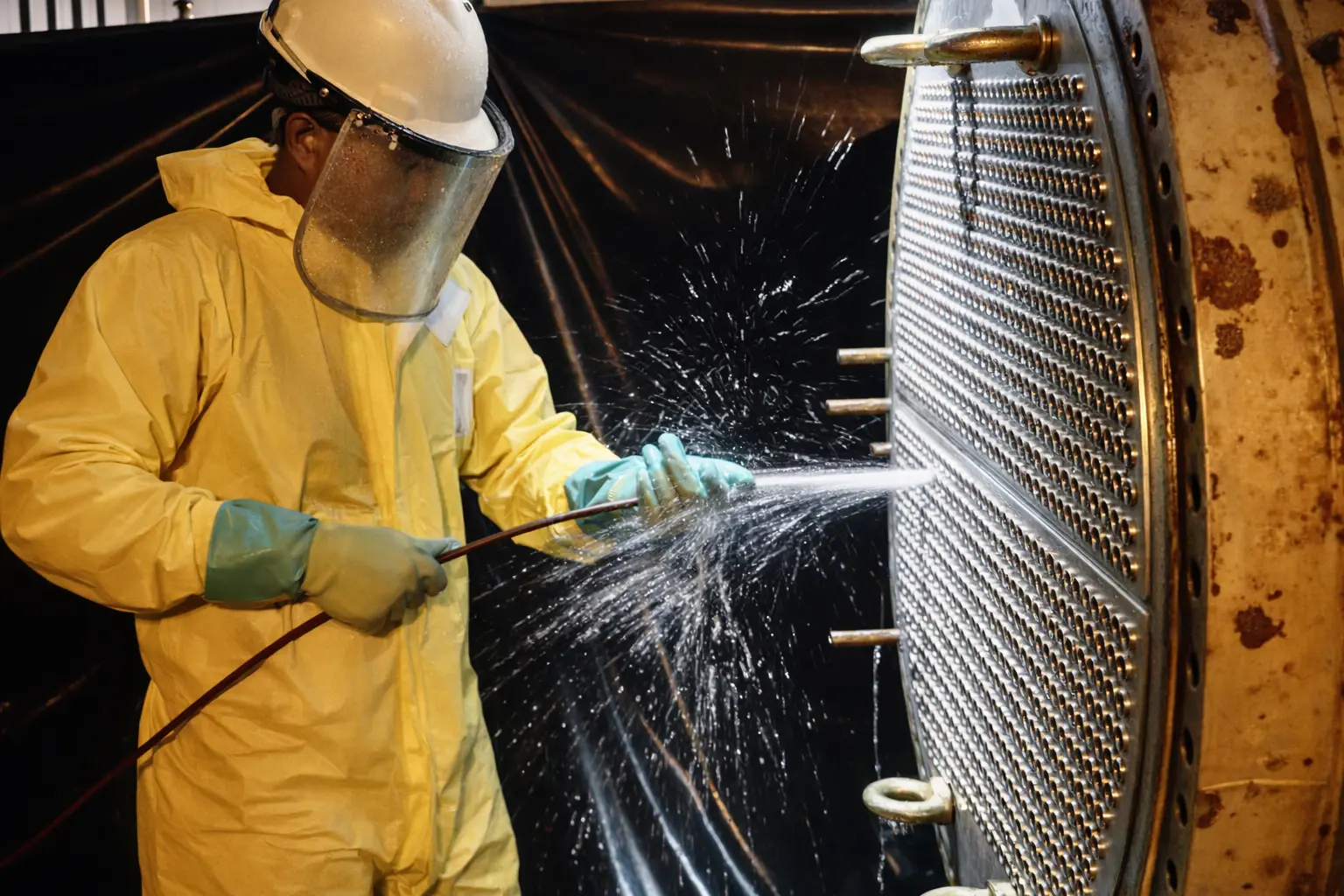
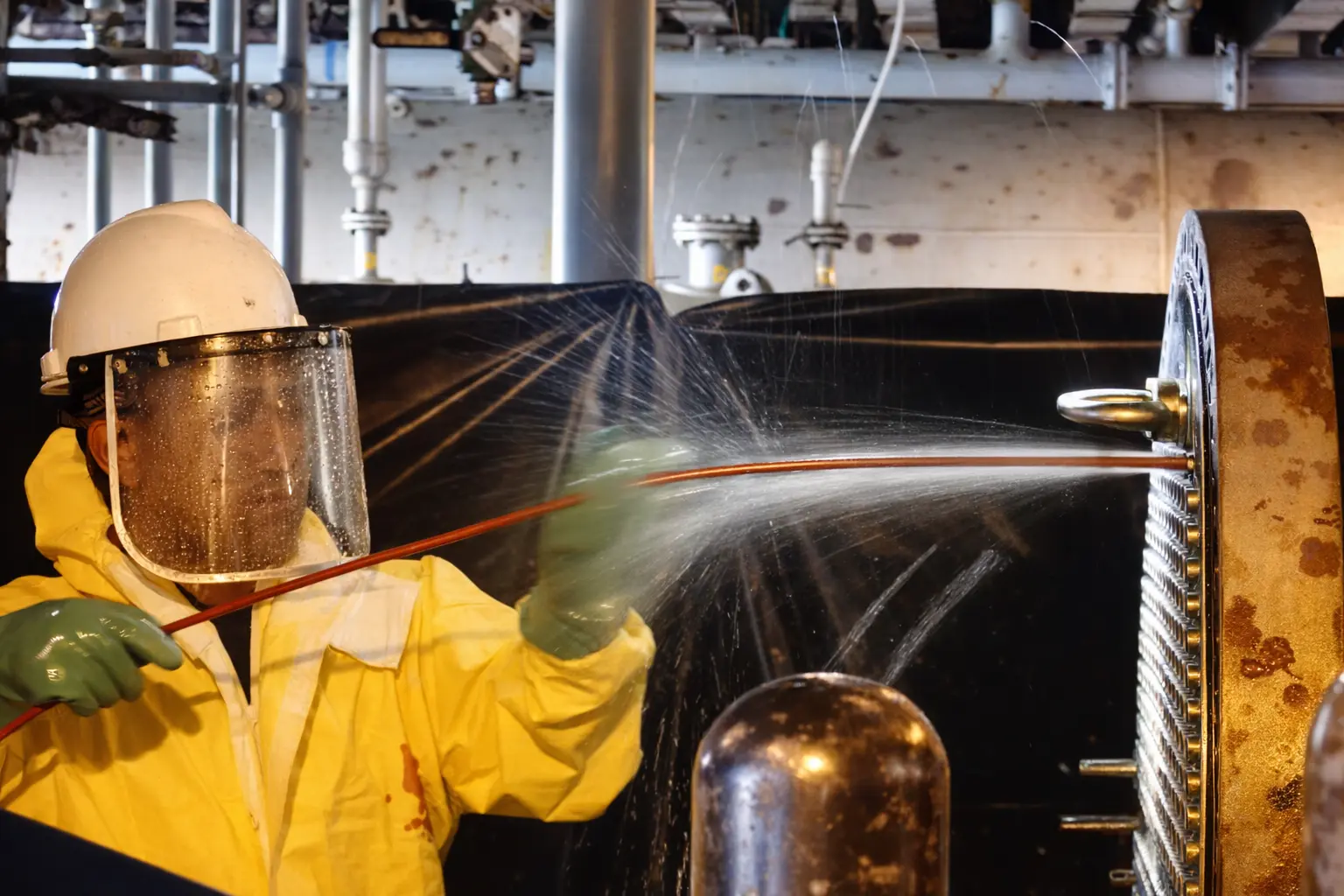
This technique uses high-pressure water jets to effectively remove stubborn deposits, scale, and other contaminants from heat exchanger surfaces. The water is propelled from a nozzle at extremely high pressures, often up to 2500 bar (36,000 psi), which blasts away dirt and debris without damaging the equipment. The process involves flexible hoses or stainless-steel lances that can navigate through both the internal and external surfaces of the heat exchanger, ensuring a thorough clean. High-pressure hydro-jetting is fast, efficient, and environmentally friendly, as it avoids the use of harsh chemicals and minimizes waste.

Our company owns state-of-the-art High Pressure Water Jet (HPWJ) and Ultra High Pressure Waterjet (UHPWJ) systems, ranging from 3,000 psi to 40,000 psi. These advanced tools effectively remove even the most stubborn deposits, ensuring a thorough and efficient cleaning process without damaging the equipment.
Versatility and Precision

High Pressure Hydro-jetting is highly versatile and can be used for both internal and external cleaning of heat exchangers. This method is particularly effective for complex geometries, such as U-shaped tubes or small-bore pipes, where other cleaning techniques might struggle to reach. The flexibility of the hoses and lances allows for thorough cleaning of even the most intricate parts of the heat exchanger, ensuring that all surfaces are free from deposits and contaminants. This comprehensive cleaning helps maintain optimal heat transfer efficiency and prolongs the lifespan of the equipment.

Environmental Benefits and Efficiency

Another significant advantage of High Pressure Hydro-jetting is its environmental friendliness. Unlike chemical cleaning methods, which can involve hazardous substances and require careful disposal, hydro-jetting uses only water, making it a safer and more sustainable option. Additionally, this technique minimizes downtime, as it can be performed quickly and efficiently, allowing production to resume with minimal interruption. The effectiveness and speed of High Pressure Hydro-jetting make it an ideal choice for maintaining the performance and reliability of heat exchangers in various industrial applications.

Mechanical Cleaning

Mechanical cleaning involves the use of specialized tools such as brushes, scrapers, and high-velocity projectiles to physically remove deposits from the surfaces of heat exchangers. This method is particularly effective for tackling hard deposits and fouling that cannot be easily dissolved or dislodged by other methods. By scraping and brushing away debris, mechanical cleaning ensures a thorough and deep clean, restoring the heat exchanger's efficiency and performance.

Versatility and Adaptability

One of the key advantages of mechanical cleaning is its versatility. This technique can be adapted to clean various types of heat exchangers, including shell and tube, plate, and finned tube exchangers. Mechanical tools can be customized to fit different sizes and shapes of heat exchanger components, ensuring that even the most intricate areas are thoroughly cleaned. This adaptability makes mechanical cleaning a reliable choice for maintaining a wide range of heat exchanger systems.

Minimizing Downtime

Mechanical cleaning is a fast and efficient process, which helps minimize downtime and disruption to operations. The use of mechanical tools allows for quick removal of fouling, enabling the heat exchanger to return to service promptly. Additionally, this method does not require the use of chemicals, making it a safer option for both the equipment and the environment. By reducing cleaning time and avoiding chemical handling, mechanical cleaning supports continuous and efficient operations.

Chemical Cleaning

Chemical cleaning involves the use of specialized chemical solutions to dissolve and remove contaminants such as scale, rust, and biological growth from heat exchanger surfaces. This method is particularly effective for dealing with deposits that are difficult to remove mechanically. By circulating the chemical solution through the heat exchanger, it penetrates and breaks down the contaminants, restoring the equipment's efficiency and performance.

Tailored Solutions for Optimal Results

One of the key advantages of chemical cleaning is the ability to tailor the cleaning solution to the specific type of fouling and the materials of the heat exchanger. Different chemicals are selected based on the nature of the deposits and the compatibility with the heat exchanger's construction materials. This customization ensures that the cleaning process is both effective and safe, preventing damage to the equipment while achieving thorough cleaning.

Minimizing Downtime and Enhancing Efficiency

Chemical cleaning is a highly efficient process that can be completed relatively quickly, minimizing downtime and disruption to operations. The method allows for in-situ cleaning, meaning the heat exchanger does not need to be disassembled, which saves time and labor costs. Additionally, the thorough removal of contaminants improves heat transfer efficiency, reduces energy consumption, and extends the lifespan of the equipment.

Ultrasonic Cleaning

Ultrasonic cleaning uses high-frequency sound waves to create millions of microscopic cavitation bubbles in a cleaning solution. When these bubbles collapse, they produce powerful shock waves that dislodge and remove particles from the surfaces of heat exchangers. This method is particularly effective for cleaning hard-to-reach areas and intricate components, ensuring a meticulous clean that other techniques might miss.

Precision and Efficiency

One of the key benefits of ultrasonic cleaning is its precision. The ultrasonic waves can penetrate deep into the smallest crevices and complex geometries of heat exchangers, providing a thorough clean without the need for disassembly. This precision not only enhances the cleaning effectiveness but also reduces the risk of damage to delicate components. Additionally, ultrasonic cleaning is highly efficient, often completing the cleaning process faster than traditional methods.

Precision and Efficiency

Ultrasonic cleaning is an environmentally friendly option as it typically requires less water and fewer chemicals compared to other cleaning methods4. The process is safe and non-invasive, making it suitable for a wide range of materials and applications. By reducing the use of harsh chemicals and minimizing waste, ultrasonic cleaning supports sustainable practices while maintaining high standards of cleanliness and performance.

Tank De-mucking

Tank de-mucking involves the removal of heavy sludge, sediment, and other solid waste from the bottom of tanks. This process is crucial for preventing blockages, maintaining capacity, and ensuring the smooth operation of your tanks. Over time, these contaminants can accumulate and harden, making them difficult to remove without specialized equipment and techniques.

Compliance and Safety

Our waste management services are designed to comply with all relevant environmental regulations and industry standards. We follow strict protocols to ensure that waste is disposed of safely and responsibly, minimizing the impact on the environment. Our team is trained to handle various types of waste, including hazardous materials, ensuring that all waste is managed in a way that protects both workers and the environment.

Efficiency and Reliability

Scheduled waste management helps to streamline the cleaning process, reducing downtime and improving overall efficiency. By coordinating waste management activities with cleaning schedules, we can ensure that your operations run smoothly and without interruption. Our reliable waste management services provide peace of mind, knowing that all waste is being handled properly and in compliance with regulations.

Categories

High Pressure Hydro-jetting

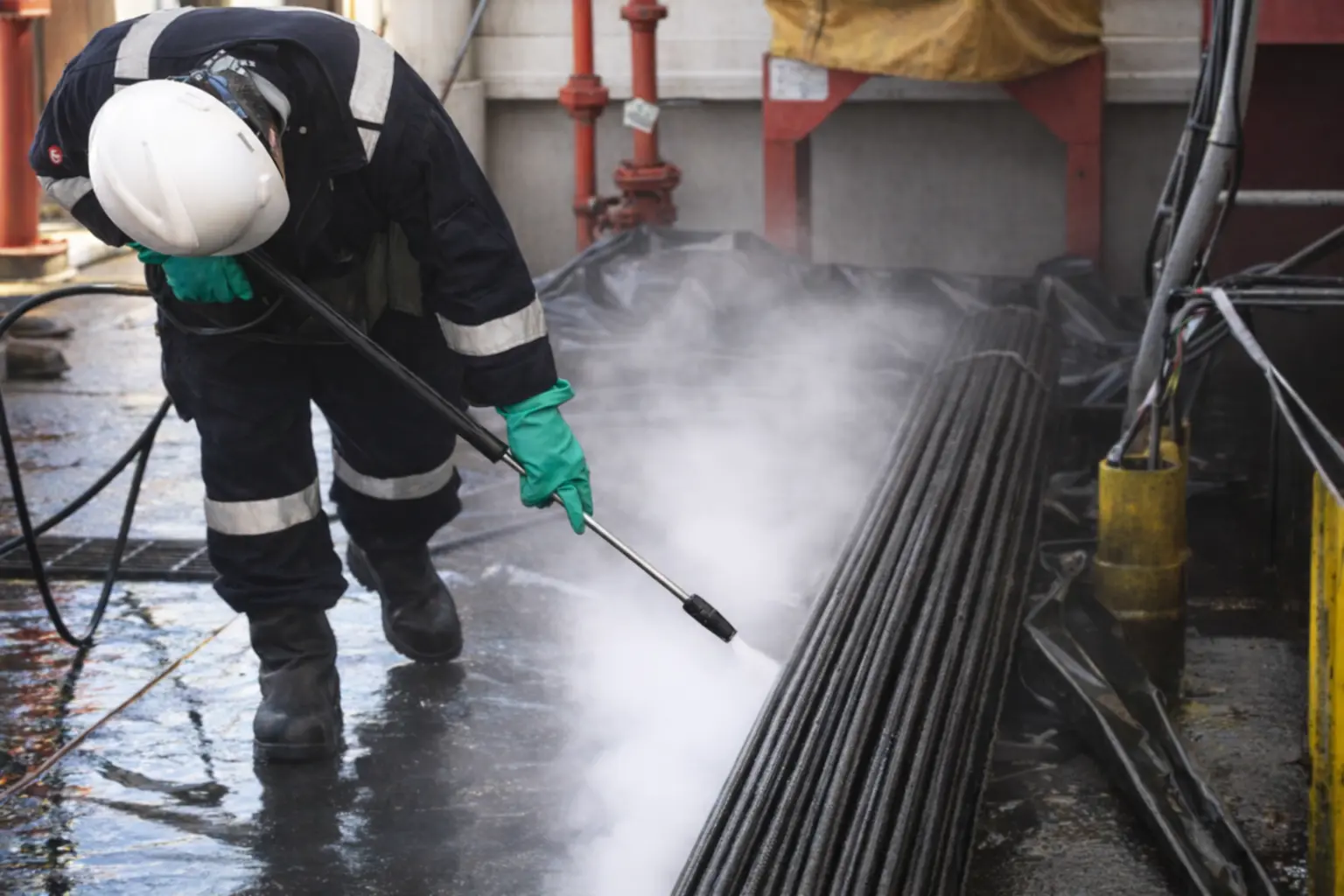
This technique uses high-pressure water jets to effectively remove stubborn deposits, scale, and other contaminants from heat exchanger surfaces. The water is propelled from a nozzle at extremely high pressures, often up to 2500 bar (36,000 psi), which blasts away dirt and debris without damaging the equipment. The process involves flexible hoses or stainless-steel lances that can navigate through both the internal and external surfaces of the heat exchanger, ensuring a thorough clean. High-pressure hydro-jetting is fast, efficient, and environmentally friendly, as it avoids the use of harsh chemicals and minimizes waste.

Our company owns state-of-the-art High Pressure Water Jet (HPWJ) and Ultra High Pressure Waterjet (UHPWJ) systems, ranging from 3,000 psi to 40,000 psi. These advanced tools effectively remove even the most stubborn deposits, ensuring a thorough and efficient cleaning process without damaging the equipment.
Versatility and Precision

High Pressure Hydro-jetting is highly versatile and can be used for both internal and external cleaning of heat exchangers. This method is particularly effective for complex geometries, such as U-shaped tubes or small-bore pipes, where other cleaning techniques might struggle to reach. The flexibility of the hoses and lances allows for thorough cleaning of even the most intricate parts of the heat exchanger, ensuring that all surfaces are free from deposits and contaminants. This comprehensive cleaning helps maintain optimal heat transfer efficiency and prolongs the lifespan of the equipment.

Environmental Benefits and Efficiency

Another significant advantage of High Pressure Hydro-jetting is its environmental friendliness. Unlike chemical cleaning methods, which can involve hazardous substances and require careful disposal, hydro-jetting uses only water, making it a safer and more sustainable option. Additionally, this technique minimizes downtime, as it can be performed quickly and efficiently, allowing production to resume with minimal interruption. The effectiveness and speed of High Pressure Hydro-jetting make it an ideal choice for maintaining the performance and reliability of heat exchangers in various industrial applications.

Mechanical Cleaning

Mechanical cleaning involves the use of specialized tools such as brushes, scrapers, and high-velocity projectiles to physically remove deposits from the surfaces of heat exchangers. This method is particularly effective for tackling hard deposits and fouling that cannot be easily dissolved or dislodged by other methods. By scraping and brushing away debris, mechanical cleaning ensures a thorough and deep clean, restoring the heat exchanger's efficiency and performance.

Versatility and Adaptability

One of the key advantages of mechanical cleaning is its versatility. This technique can be adapted to clean various types of heat exchangers, including shell and tube, plate, and finned tube exchangers. Mechanical tools can be customized to fit different sizes and shapes of heat exchanger components, ensuring that even the most intricate areas are thoroughly cleaned. This adaptability makes mechanical cleaning a reliable choice for maintaining a wide range of heat exchanger systems.

Minimizing Downtime

Mechanical cleaning is a fast and efficient process, which helps minimize downtime and disruption to operations. The use of mechanical tools allows for quick removal of fouling, enabling the heat exchanger to return to service promptly. Additionally, this method does not require the use of chemicals, making it a safer option for both the equipment and the environment. By reducing cleaning time and avoiding chemical handling, mechanical cleaning supports continuous and efficient operations.

Chemical Cleaning

Chemical cleaning involves the use of specialized chemical solutions to dissolve and remove contaminants such as scale, rust, and biological growth from heat exchanger surfaces. This method is particularly effective for dealing with deposits that are difficult to remove mechanically. By circulating the chemical solution through the heat exchanger, it penetrates and breaks down the contaminants, restoring the equipment's efficiency and performance.

Tailored Solutions for Optimal Results

One of the key advantages of chemical cleaning is the ability to tailor the cleaning solution to the specific type of fouling and the materials of the heat exchanger. Different chemicals are selected based on the nature of the deposits and the compatibility with the heat exchanger's construction materials. This customization ensures that the cleaning process is both effective and safe, preventing damage to the equipment while achieving thorough cleaning.

Minimizing Downtime and Enhancing Efficiency

Chemical cleaning is a highly efficient process that can be completed relatively quickly, minimizing downtime and disruption to operations. The method allows for in-situ cleaning, meaning the heat exchanger does not need to be disassembled, which saves time and labor costs. Additionally, the thorough removal of contaminants improves heat transfer efficiency, reduces energy consumption, and extends the lifespan of the equipment.

Ultrasonic Cleaning

Ultrasonic cleaning uses high-frequency sound waves to create millions of microscopic cavitation bubbles in a cleaning solution. When these bubbles collapse, they produce powerful shock waves that dislodge and remove particles from the surfaces of heat exchangers. This method is particularly effective for cleaning hard-to-reach areas and intricate components, ensuring a meticulous clean that other techniques might miss.

Precision and Efficiency

One of the key benefits of ultrasonic cleaning is its precision. The ultrasonic waves can penetrate deep into the smallest crevices and complex geometries of heat exchangers, providing a thorough clean without the need for disassembly. This precision not only enhances the cleaning effectiveness but also reduces the risk of damage to delicate components. Additionally, ultrasonic cleaning is highly efficient, often completing the cleaning process faster than traditional methods.

Precision and Efficiency

Ultrasonic cleaning is an environmentally friendly option as it typically requires less water and fewer chemicals compared to other cleaning methods4. The process is safe and non-invasive, making it suitable for a wide range of materials and applications. By reducing the use of harsh chemicals and minimizing waste, ultrasonic cleaning supports sustainable practices while maintaining high standards of cleanliness and performance.

Tank De-mucking

Tank de-mucking involves the removal of heavy sludge, sediment, and other solid waste from the bottom of tanks. This process is crucial for preventing blockages, maintaining capacity, and ensuring the smooth operation of your tanks. Over time, these contaminants can accumulate and harden, making them difficult to remove without specialized equipment and techniques.

Compliance and Safety

Our waste management services are designed to comply with all relevant environmental regulations and industry standards. We follow strict protocols to ensure that waste is disposed of safely and responsibly, minimizing the impact on the environment. Our team is trained to handle various types of waste, including hazardous materials, ensuring that all waste is managed in a way that protects both workers and the environment.

Efficiency and Reliability

Scheduled waste management helps to streamline the cleaning process, reducing downtime and improving overall efficiency. By coordinating waste management activities with cleaning schedules, we can ensure that your operations run smoothly and without interruption. Our reliable waste management services provide peace of mind, knowing that all waste is being handled properly and in compliance with regulations.
HYDRISE SOLUTION SDN. BHD.
© 2025 All Rights reserved
Design & Development By
Senicode Sdn bhd
HYDRISE SOLUTION SDN. BHD.
© 2025 All Rights reserved

Global Partner Showcase: Hampel

Hampel – Advanced Insulation Coating Solutions
Hydrise Solution delivers repair and integrity services for pressure vessels, tanks, and columns. To extend equipment life and improve operational efficiency, we partner with Hampel, offering advanced insulation coating technologies that provide superior protection, thermal performance, and cost savings for onshore and offshore facilities.

Why Hampel Insulation Coating Matters

  • Thermal Insulation & Energy Savings
    Hempel insulation coatings help reduce energy loss or heat absorption, contributing to significant energy efficiency and lower operating costs.
  • Corrosion Protection
    Acts as a barrier against corrosion, enhancing the durability and service life of equipment, and effectively managing corrosion under insulation (CUI).
  • Condensation Control
    Reduces the risk of condensation, which is critical in humid or variable temperature environments.
  • Space-Saving & Easy Application
    Applied like paint using air-assisted airless spray equipment, these coatings are much thinner than traditional insulation, saving valuable space and simplifying installation.
  • Environmental Resistance
    Designed to withstand harsh chemicals, UV light, and extreme temperatures (from cryogenic -10°C up to 240°C for primer, and up to 175°C for insulation coat).
  • Personnel Protection & Process Control
    Suitable for personnel protection systems (PP caging) and process control, with build-up thickness tailored to application needs.
  • Long-Term Performance & Warranty
    Proven long performance life, with warranties up to 5–7 years, and low maintenance cycles (6–7 years vs. 3–4 years for conventional methods).
  • Cost-Effective & Fast Turnaround
    Case studies show shorter application duration, reduced manpower, and lower indirect costs compared to conventional rockwool and metal jacketing. For example, offshore projects finished in 42 days (vs. 52 days), with significant savings in logistics and execution costs.
  • Easy Maintenance & Touch-Up
    Damaged areas can be easily touched up by brush or roller without losing impact and energy resistance.
  • Dual Functionality
    Provides both energy savings and corrosion protection in a single system.
  •  

How It Complements Hydrise Services:
When Hydrise refurbishes or maintains tanks and vessels, Hampel’s coatings and insulation solutions provide the finishing layer—ensuring long-term protection, improved energy efficiency, and reduced total cost of ownership.

Global Partner Showcase: Jereh

Jereh – Automatic Tank Cleaning (ATC) & Sludge Oil Recovery (SOR)
Hydrise is committed to improving safety and efficiency in pressure vessel and tank maintenance. To achieve this, we partner with Jereh, a global leader in automated cleaning and sludge recovery technologies that enhance traditional tank cleaning processes.

Why Jereh Matters

  • Innovative Technology for Safer Operations
    ATC systems reduce manual entry into tanks, minimising confined space risks and improving worker safety.
  • Efficiency and Speed
    Automated cleaning accelerates turnaround schedules, reducing downtime compared to conventional methods.
  • Cost-Effective Solutions
    SOR technology recovers valuable hydrocarbons from sludge, cutting waste disposal costs and maximising resource utilisation.
  • Environmental Compliance
    Cleaner processes and reduced waste support sustainability goals.
  •  

How It Complements Hydrise Services:
When Hydrise performs tank cleaning and maintenance, Jereh’s ATC and SOR solutions provide an advanced alternative to manual cleaning—delivering better safety, faster execution, and lower overall costs.

Global Partner Showcase: Saiptech

Process Internals & Separation Technologies
Hydrise Solution, in collaboration with our international principal Saiptech, offers a comprehensive portfolio of process internals and separation technologies for the oil & gas, petrochemical, chemical, and environmental sectors. Our solutions are designed to optimise plant performance, reliability, and efficiency across a wide range of applications.

Saiptech brings extensive global experience, having supplied equipment and services to major projects in over 60 countries—including collaborations with leading national petroleum and chemical companies. This ensures our technologies are proven and trusted worldwide.

We deliver advanced solutions for distillation, absorption, extraction, and multi-phase separation. Our offerings cover reactor internals, mass transfer internals, separator internals, and full engineering support, from design to commissioning.

Key Products & Solutions:

Mass Transfer Internals: Valve trays, sieve trays, bubble cap trays, structured and random packing, and mist eliminators—maximising separation efficiency and product purity.

Separator Internals: Mist eliminators, vane packs, chevron droplet separators, spin and settle plate separators, and sand jetting systems—ensuring effective phase separation and equipment protection.

Column Internals: Liquid distributors, support grids, and other components for stable, efficient column operation.

Engineering & Field Services:
We provide process simulations, hydraulic calculations, CFD modelling, 3D design, installation consulting, supervision, troubleshooting, and start-up assistance—ensuring optimal equipment performance and reliability.

With rigorous quality assurance, international standards, and comprehensive technical support, Hydrise Solution and Saiptech deliver reliable products and services tailored to your operational needs.